
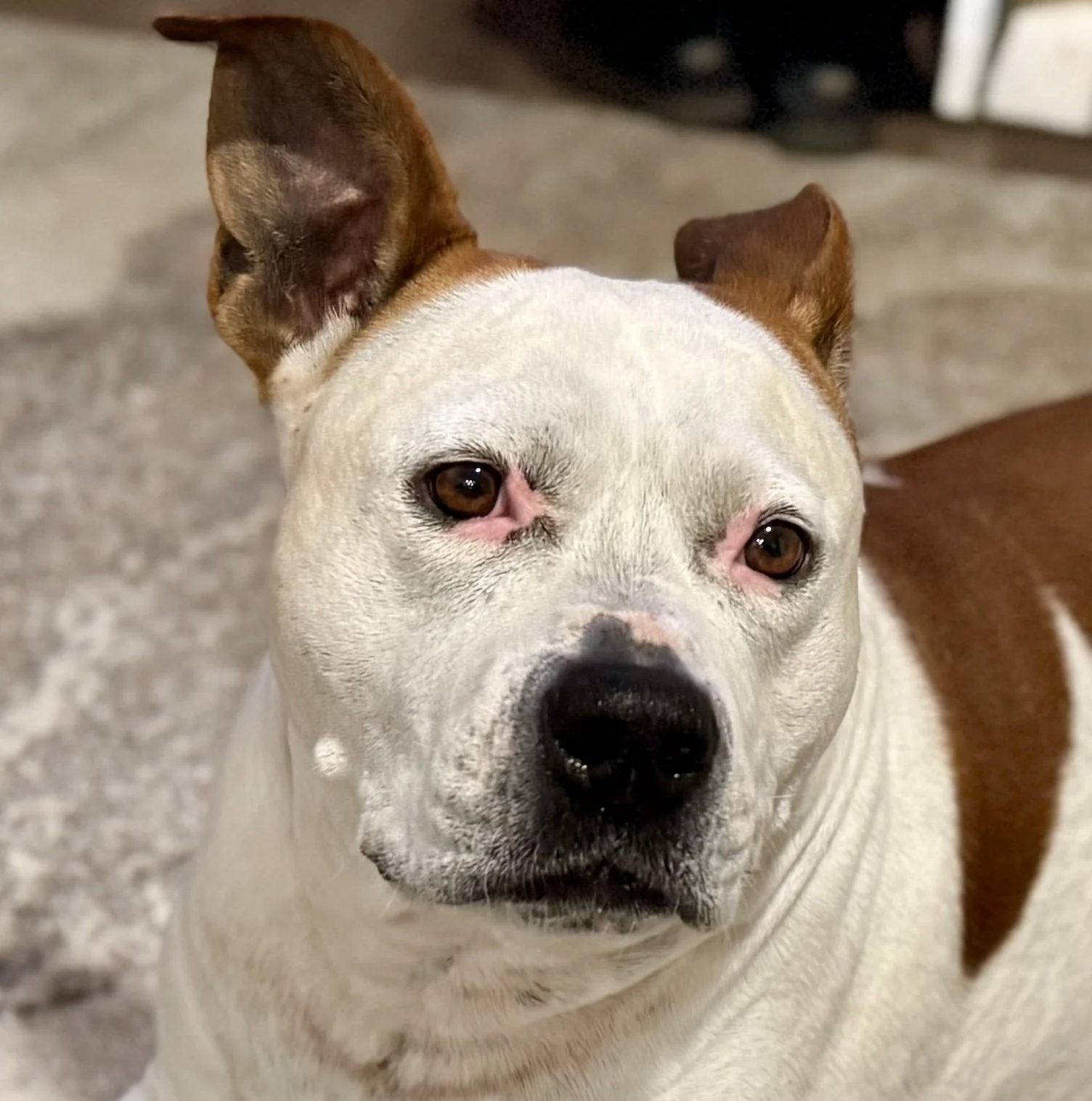
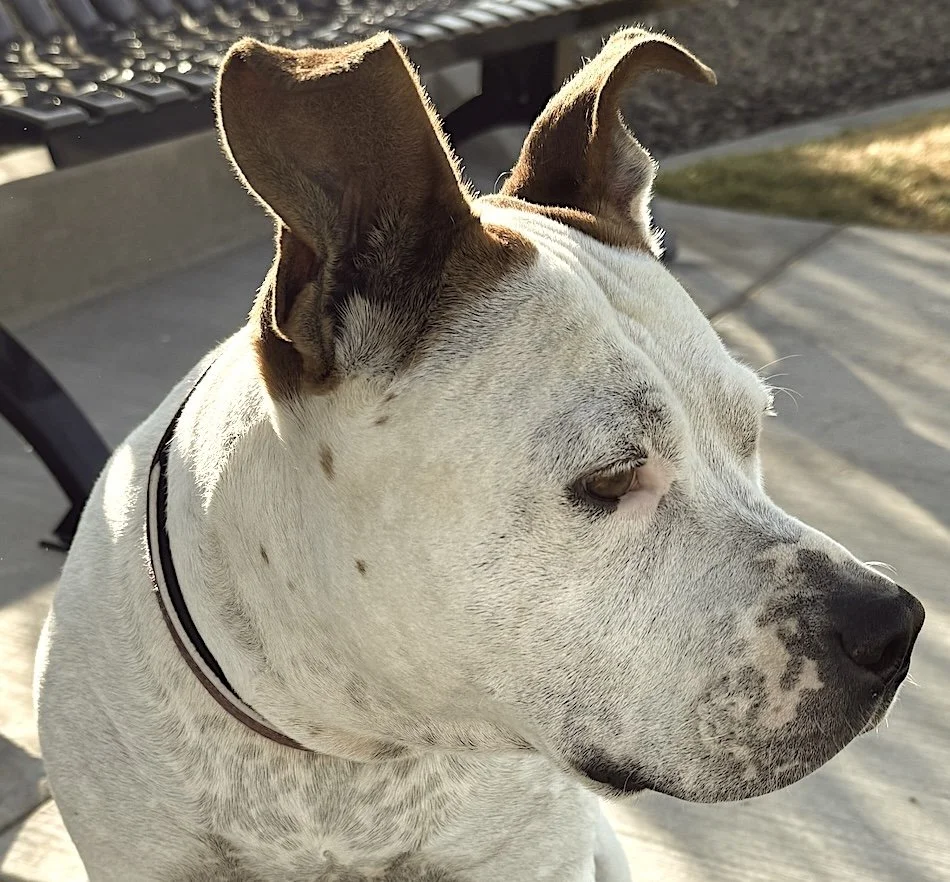
Meet Rey
What Is a Service Dog?
A service dog is a highly trained working animal that assists an individual with a disability by performing specific tasks related to that person’s health, safety, or daily functioning. Unlike emotional support or therapy animals, a service dog is trained to actively respond to real-world situations—often anticipating or mitigating medical or physical challenges before they escalate. Service dogs are focused, calm, and reliable in public settings, and they are conditioned to remain attentive to their handler at all times.
Service dogs are trained to work unobtrusively in a wide range of environments, including homes, public spaces, transportation, and medical settings. Their role is not companionship alone, but partnership—providing consistent support that allows their handler greater independence, confidence, and safety in daily life.
Rey is a 5.5-year-old female American Staffordshire Terrier who is fully trained as a service dog for her handler, Gayle Stavrenos. She is in excellent health, maintains a calm and steady temperament, and is fully current on all vaccinations through 2026, with a clean bill of health.
Rey has completed comprehensive service-dog training and performs her duties with focus and reliability. She is conditioned to remain composed in public environments, responsive to commands, and attentive to Gayle’s condition at all times. Her training emphasizes situational awareness, controlled behavior, and consistent task execution.
Rey’s Role & Training
As a service dog, Rey is trained to assist and protect Gayle by remaining alert to potential risks and responding appropriately when assistance is needed. She is conditioned to stay close, maintain awareness of her handler’s physical state, and alert nearby individuals if Gayle experiences a medical emergency requiring attention. Rey’s presence provides both a proactive layer of safety and a rapid response mechanism when circumstances demand it.
Rey is not reactive or aggressive; her training prioritizes calm assessment, clear signaling, and protective awareness rather than confrontation. Her work allows Gayle greater peace of mind, independence, and stability in daily activities—both at home and in public settings.